

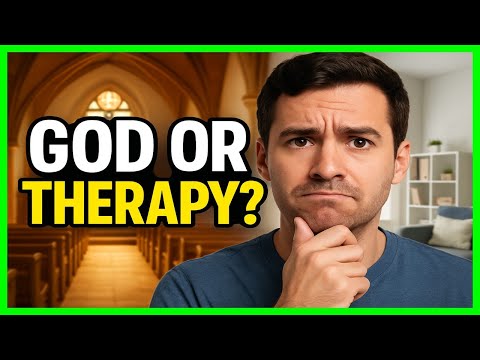
Mental health challenges can feel isolating, leading you to wonder if prayer alone is enough. You might even question if seeking therapy somehow shows a lack of faith. This post will show you how the Bible actually supports using professional help, not just relying on spiritual solutions. You don’t have to choose between God and therapy; you can have both.
Key Takeaways:
You know, sometimes we hear “just pray about it” when we’re really struggling, and it feels like that’s the *only* Christian answer. But what if God actually uses other people, even professionals, to help us heal? This book, ‘God or Therapy?’, really opens up that conversation in a thoughtful way.
1. The book challenges the idea that seeking therapy shows a lack of faith. Instead, it argues that God often works through various means, including professional counselors, to bring healing and restoration to individuals. Just like a doctor for a broken bone, a therapist can help mend emotional wounds.
2. Scripture supports the concept of seeking wise counsel. The Bible frequently emphasizes the importance of community and guidance from others, and this principle extends to mental health struggles. Think about all those Proverbs about listening to good advice!
3. Our spiritual and psychological well-being are deeply interconnected. You can’t really separate them. The book highlights how emotional and mental health issues can impact our spiritual lives, and addressing them professionally can actually strengthen our faith journey. It’s not one or the other; it’s both.
4. Therapy can be a tool for understanding ourselves better, which can lead to spiritual growth. By exploring our past, our patterns, and our triggers with a trained professional, we gain insights that help us relate to God and others more effectively. It’s a journey of self-discovery that can draw us closer to Him.
5. The book addresses common Christian objections to therapy head-on. It tackles worries about relying on secular wisdom or whether therapy undermines God’s sovereignty, offering biblical counter-arguments that are both compassionate and sound. It really helps clear up some long-held misconceptions.
6. Professional help is a form of God’s common grace. God gives wisdom and understanding to all people, regardless of their faith, and therapists often possess skills and knowledge that can genuinely help people process trauma, manage anxiety, or overcome depression. It’s a gift we shouldn’t dismiss.
7. Seeking therapy doesn’t replace prayer or spiritual disciplines; it complements them. The book encourages a holistic approach where individuals integrate their faith practices with professional guidance, creating a comprehensive path to healing and wholeness. It’s about using all the resources God provides.


Is it a lack of faith? Let’s get real about the guilt.
Perhaps you’ve felt that nagging whisper, that idea that seeking professional help somehow means you’re not trusting God enough. You’re not alone in battling this guilt. Many believers wrestle with the idea that relying on anything other than prayer alone signifies a spiritual weakness, a failure to fully surrender.
Why we’re so scared of what the church thinks
You know the pressure. People worry about being judged, about what others in their church community might say or think if they admit they’re struggling and need help beyond spiritual counsel. It’s a heavy burden, this fear of perception.
The problem with “spiritualizing” every single struggle
You might hear things like, “just pray more,” or “read your Bible.” This approach, while well-intentioned, often dismisses real, tangible issues as purely spiritual battles, ignoring the complex interplay of mind, body, and spirit.
This tendency to “spiritualize” every issue can be incredibly damaging. You find yourself feeling like a spiritual failure if prayer doesn’t magically fix your anxiety or depression. It creates a false dichotomy, as if God can only work through one specific channel – direct spiritual intervention – rather than through the wisdom and gifts He has given to people, including mental health professionals. We wouldn’t tell someone with a broken leg to just pray harder instead of seeing a doctor, would we? Why do we treat the mind any differently?

God’s Gift of Professional Wisdom
You wouldn’t hesitate to see an oncologist for cancer, right? The same logic applies to your mental well-being. God gifted us with intellect and specialized knowledge, and professional therapists are stewards of that wisdom. Recognizing their expertise is acknowledging a divine provision for your healing journey.
If you’d go to a heart doctor, why not a therapist?
Think about it: you trust doctors with your physical health because they’ve studied for years. Your mind and emotions are just as complex, deserving the same specialized care. It’s smart to seek out someone trained to help you understand and heal them.
How “common grace” is actually a game-changer
Imagine a world where only believers could invent things or discover scientific truths. That’s not how God works. His “common grace” means He blesses everyone with abilities, even those who don’t know Him, and that includes therapeutic insight.
This concept of common grace really broadens our understanding of God’s work in the world, doesn’t it? It means that even unbelievers can possess incredible wisdom, compassion, and insight, all ultimately stemming from God’s generous hand. So, when a therapist, regardless of their personal faith, offers genuine help and healing, you can absolutely see it as a gift from God. He uses all kinds of people, with all sorts of backgrounds, to bring good into the world, including emotional and mental well-being.


What the Bible says about getting some solid advice
Why a “multitude of counselors” is a total win
You’ll discover the Bible consistently champions seeking wise counsel. Proverbs 11:14 says, “Where there is no guidance, a people falls, but in an abundance of counselors there is safety.” You aren’t meant to figure everything out alone, you know?
Wisdom doesn’t always come in a lightning bolt
Sometimes, God uses everyday people to deliver profound insights. You might think wisdom only comes from direct divine intervention, but often, it’s through others that clarity emerges. You’ll find this a recurring theme.
You may expect a dramatic revelation, a burning bush moment, or even a still, small voice whispering directly into your ear. And yes, God absolutely works that way sometimes! But let’s be real, often His wisdom is expressed through the people He’s placed around you. You’ve probably experienced it yourself – a friend’s timely word, a pastor’s sermon, or even a book that just clicks. It’s not about waiting for a supernatural sign; it’s about recognizing how God works through the natural, too. You’re meant to engage with the world and the people in it, because that’s often where you’ll find the answers you’re looking for.

My take on the whole “Just Pray More” advice
You’ve probably heard it before, right? Someone struggling, and the well-meaning, but often unhelpful, advice rolls in: “Just pray more.” It’s offered with good intentions, but it misses a critical point about how God actually works in our lives.
Why that’s honestly kind of toxic sometimes
This simplistic advice can make you feel inadequate, like your faith isn’t strong enough. It suggests if you’re still struggling, you’re not praying hard enough, which just piles on guilt. That’s not helpful, is it?
How to pray and do the work at the same time
You can absolutely invite God into your healing process while actively seeking professional help. Think of prayer as opening the door for divine guidance, and therapy as walking through it.
Consider prayer as your direct line to God, a conversation where you express your fears, hopes, and struggles. Lay it all out there. Then, when you’re in therapy, you’re actively engaging with the tools and insights God provides through skilled professionals. It’s not one or the other; it’s a powerful combination, a partnership between your faith and practical steps.
The real deal about science and your soul
You might wonder, “Doesn’t science contradict faith?” God, the ultimate creator, designed the very laws governing our universe, including the complexities of the human mind. Accepting scientific insights, therefore, can actually deepen your appreciation for His intricate handiwork, not diminish it.
Psychology isn’t the enemy, I promise
Is psychology just a secular invention, something to avoid? This field explores the human mind, a creation of God, offering incredible insights into how you think, feel, and behave. It’s a tool, like medicine, for understanding and healing.
Why God’s okay with you using every tool available
Are you hesitant to seek professional help, feeling like it implies a lack of faith? God, in His boundless wisdom, provides many avenues for healing and growth. He equips people with knowledge and skills, expecting us to use them.
Think about it this way: if you broke your leg, would you only pray and expect it to heal, or would you also go to a doctor for a cast? God, in His grace, gave us brilliant doctors and advanced medicine for physical ailments. Why would mental health be any different? He designed your brain, and sometimes, those intricate systems need specialized care. He’s not just okay with you using every resource available; He probably expects it, because He’s given us the intelligence to develop these very tools.
Finding a pro who actually gets your faith
Finding a therapist who understands your spiritual journey can feel like searching for a needle in a haystack, right? You want someone who won’t dismiss your faith or treat it as an obstacle, but rather as an integral part of who you are and what you’re facing. It’s about finding that person who can truly walk alongside you, respecting your beliefs while offering professional guidance.
Do you really need a “Christian” counselor?
You might wonder if a counselor absolutely needs to share your specific faith. Sometimes, a secular therapist with cultural competence and an open mind can be incredibly effective, truly. What matters most is their ability to respect your worldview and integrate it into your healing process.
Questions to ask so you don’t waste your time
Before you commit, asking direct questions can save you a lot of frustration and money. You absolutely need to know if their approach aligns with your values.
You’ll want to inquire about their experience working with clients of faith, specifically how they integrate spiritual practices or beliefs into their therapeutic framework. Ask them point-blank about their views on the Bible’s authority or if they’re comfortable discussing prayer and scripture in sessions. This isn’t about finding someone who preaches at you, but someone who understands your foundation.
Conclusion
The Bible doesn’t present an either/or scenario between God and therapy; you’ll find it actually encourages seeking wisdom and help from others. You’re called to steward your well-being, and sometimes that means professional guidance. God uses many avenues for healing, and skilled counselors are definitely one of them. Embrace the resources available to you, knowing they can complement your faith journey.
FAQ
Q: Is seeking therapy a sign of weak faith or a lack of trust in God?
A: Many people worry that if they turn to a therapist, it means they aren’t relying on God enough. That’s a really common concern, and it’s understandable why someone might feel that way. But think about it this way: God gives us all sorts of resources to navigate life’s challenges. We pray for healing and then go to a doctor, right? We ask for wisdom and then study or seek advice from knowledgeable people. Therapy, when done by a Christian professional, can be another one of those God-given resources, offering tools and insights that complement, rather than replace, our spiritual journey.
Seeking help often shows strength, not weakness. It means you’re serious about getting better and honoring the life God has given you. It’s about being proactive in addressing mental and emotional struggles, much like you’d be proactive about a physical ailment. God can absolutely work through a skilled therapist to bring healing and understanding.
Q: How does professional therapy align with biblical principles of healing and restoration?
A: The Bible talks a lot about wisdom, community, and restoration. Proverbs tells us there’s wisdom in a multitude of counselors (Proverbs 11:14). Therapists are trained counselors, offering a specific type of wisdom and insight into human behavior and mental health. They can help us understand patterns, process trauma, and develop healthier coping mechanisms.
Jesus himself spent a lot of time ministering to people’s whole selves – body, mind, and spirit. He cared deeply about emotional suffering. Therapy, particularly Christian therapy, often helps us identify lies we believe, heal past wounds, and move towards a more integrated, whole person, which really reflects God’s desire for our restoration. It’s not just about feeling better; it’s about becoming more like Christ in our emotional health.
Q: What’s the difference between talking to a pastor or trusted friend and going to a professional therapist?
A: Pastors and trusted friends are absolutely invaluable for spiritual guidance, prayer, and emotional support. They play a huge role in our lives, and we should definitely lean on them. But a professional therapist brings a different skill set to the table. They have specific training in psychology, mental health disorders, therapeutic techniques, and ethical boundaries.
A therapist can diagnose conditions like depression or anxiety, teach specific coping skills, or help process deep-seated trauma in a structured, confidential way that friends or even pastors aren’t typically equipped to do. It’s like how you’d go to a doctor for a broken leg, even though your friend can offer comfort. Both roles are important, but they serve different, specialized functions.
Q: Can I trust a secular therapist, or should I only seek out Christian counselors?
A: This is a really personal choice, and both options have their merits. A Christian counselor shares your faith framework, which can be incredibly comforting and helpful. They can integrate biblical principles and prayer directly into sessions, and they’ll understand your spiritual struggles from a similar perspective.
A secular therapist, while not necessarily sharing your faith, can still be highly effective. They are trained in evidence-based therapeutic methods that work for people of all backgrounds. The important thing is finding a therapist who is competent, ethical, and with whom you feel a good connection. Some Christians prefer secular therapists to avoid potential spiritualizing of psychological issues. If you choose a secular therapist, you can always bring your faith into the conversation if you feel comfortable, or discuss how their advice aligns with your beliefs outside of sessions. The key is finding someone who respects your values and helps you grow.
Q: How do I know if my struggles warrant professional help versus just relying on prayer and spiritual disciplines?
A: That’s a tough line to draw sometimes, isn’t it? Prayer and spiritual disciplines are foundational to our walk with God and vital for navigating life. They provide comfort, guidance, and strength. However, if you’ve been consistently struggling with intense sadness, anxiety, anger, hopelessness, or difficulty functioning in daily life for an extended period – say, several weeks or months – then it’s probably time to consider professional help.
If your relationships are suffering, your work or school performance is declining, or you’re having trouble sleeping, eating, or finding joy in anything, those are big indicators. It’s not about choosing between God and therapy; it’s about using all the tools God provides. Think of it as preventative care or intervention. You wouldn’t just pray away a broken bone; you’d pray AND go to the doctor. Mental health works similarly. If you’re unsure, a consultation with a therapist can help you assess your needs without commitment.
Q: What if I’ve tried therapy before and it didn’t work for me?
A: It’s completely understandable to feel discouraged if you’ve had a negative therapy experience. Just like with any profession, not all therapists are the same, and not every approach works for every person. Think about finding a good doctor or even a good mechanic – sometimes it takes a few tries to find the right fit.
The relationship with your therapist, often called the “therapeutic alliance,” is a huge predictor of success. If you didn’t feel understood, challenged in a helpful way, or comfortable with your previous therapist, that’s a valid reason for it not to have worked. Don’t give up on the idea of therapy entirely. Consider trying a different type of therapy (like CBT, DBT, or psychodynamic), or specifically look for a therapist with a different personality or approach. Asking for recommendations from trusted friends or your pastor might also help you find someone new.
Q: What are some practical steps I can take to find a good Christian therapist?
A: Finding the right therapist can feel a bit overwhelming, but there are definitely practical steps you can take. First, talk to your pastor or trusted church leaders; they often have networks of Christian counselors they can recommend. You can also check online directories specifically for Christian therapists, like the American Association of Christian Counselors (AACC) website.
When you find a few potential candidates, don’t be afraid to call them for a brief introductory chat. Many therapists offer a free 10-15 minute phone consultation. During this call, you can ask about their approach, their fees, whether they integrate faith into their practice, and just get a feel for their personality. Ask them how they view the relationship between faith and psychology. It’s okay to interview a few people until you find someone you feel comfortable with and who aligns with your values. Do not forget, this is about your well-being, so take your time to choose wisely.
https://renewedmindproject.com/psalms-for-anxiety-a-therapists-guide/